
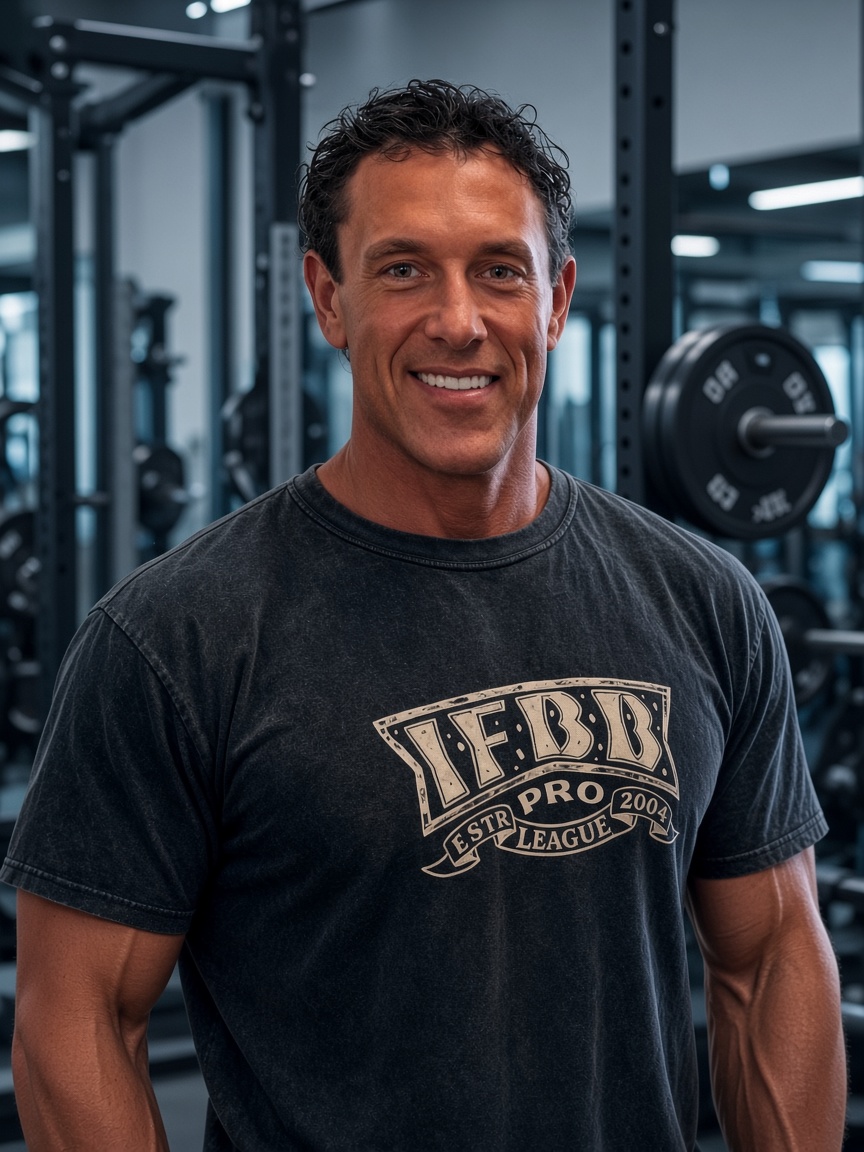
Sometimes a new client sits down across from me in my office. They’re a hundred pounds overweight, and they look up at me, or at the pictures on my wall from a show, and I can see what they’re thinking: he could never understand where I’m coming from.
I get it. From the outside, a guy on a bodybuilding stage looks like he was always that way.
But I have been there. At my heaviest I weighed about 320 pounds. By the time I stepped on stage, I had lost about 150 of them.
It wasn’t overnight. Over about seven years I went from about 230 or 240 pounds up to 320, peaking around age 40. And here’s the thing about getting to a heavyweight: you don’t realize how miserable you are except for when you try to do anything. You get out of breath. You feel flushed. You feel your blood pressure up. It’s hard to tie your shoes. It’s hard to walk up steps. It’s like literally picking up a 100-pound bag and carrying it on your shoulders everywhere you go. Miserable isn’t dramatic language. It’s what ordinary movement felt like.
An ordinary day was just making mistakes. It wasn’t that I was gorging on food constantly. Small steps add up. And once you get there, your body loves homeostasis. It wants to keep that same weight. I’d have what looked like a regular meal for lunch — unfortunately that "regular" meal would be about 1,500 calories for one meal. Add a nighttime meal and breakfast, and next thing you know you’re eating 5,000 calories a day easy. If anyone stopped to add up a day, they’d realize what a surplus it was. It was terrible. That is how weight creeps up when you are busy and not counting: one meal that looks normal, then another, then another, until the day is a huge surplus and you still feel like you "didn’t eat that much."
Then I got the wake-up call. I went to the doctor, and it ended with him saying they were sending me directly over to the emergency room. My blood pressure was 210/120. All of my blood work came back absolutely horrible. And I said: I’m not going to live like this.
That was the catalyst. At the end of January I set a goal: by December, I’m going to step on a stage — even though everyone said I couldn’t. I needed a finish line that mattered to me, not another vague promise to "eat better."
It’s not as simple as just cutting back on food and going for a walk around the neighborhood. It’s like balancing your checkbook. You need to know exactly where you’re at — what goes in and what is burned. Energy in versus energy out.
When I finally did the work, it was very simple: I ate in a calorie deficit and I did resistance training. Nothing fancy.
The real changes happened once I began tracking my food. If you don’t know what’s really going in your mouth, you don’t have a chance. You might lose weight. But to make a real change in your body composition and get healthier, it’s not just how much you eat. It’s what you eat. What substance. What macros. That was the shift for me: knowing the numbers — energy in versus energy out — and building habits around food quality and macros, not just hoping a walk around the neighborhood would fix it.
Believe it or not, the hardest thing wasn’t the food or the training. It was what I heard from other people. "Why do you have to be so extreme?" Evidently they didn’t think my blood pressure being 210/120 was too extreme — but they were worried about me watching what I ate and drank. That kind of feedback can make you second-guess a plan that is actually getting you healthier. I kept going anyway. I realized not as many people were going to cheer me on for getting healthier as I’d hoped, so the motivation had to come from inside me. That’s why I set the competition stage as my goal. It was mine.
I’ve loved bodybuilding since the ’70s and ’80s. Health and fitness were very important to me, which made this whole episode even more difficult. I had friends who competed and friends who coached. It was something I did too, but it was really hard to do from the sideline weighing 300-plus pounds — especially with a corporate job. Watching other people chase the thing you care about while you sit it out is a hard place to live. Getting on stage meant I wasn’t stuck on the sideline anymore. Today I coach full-time, and I still take that trust seriously.
And it isn’t all in the past. I still battle nerve damage every day. It comes from a broken neck and ruptured discs at C3-4, C4-5, and C5-6, repaired with a titanium plate and cadaver bone. It’s not something I’d expect anyone else to take lightly, and it’s part of why I don’t coach from the outside looking in.
I’ve had clients lose 150 pounds or more and go on to compete. None of them started out believing they could. They started by trusting someone with their journey. When you hand me that trust, I treat it as something heavy and something I’m grateful for. If you’ll put your trust in me, that goes a long way, and I don’t want to disappoint you.
Here’s my promise. If you bring the will and the work ethic, I’m going to support you.
If you’re ready for a plan that fits real life — not a perfect week — Lifestyle Coaching is $99 a month.
Stay strong,
Coach Nate Eaton