
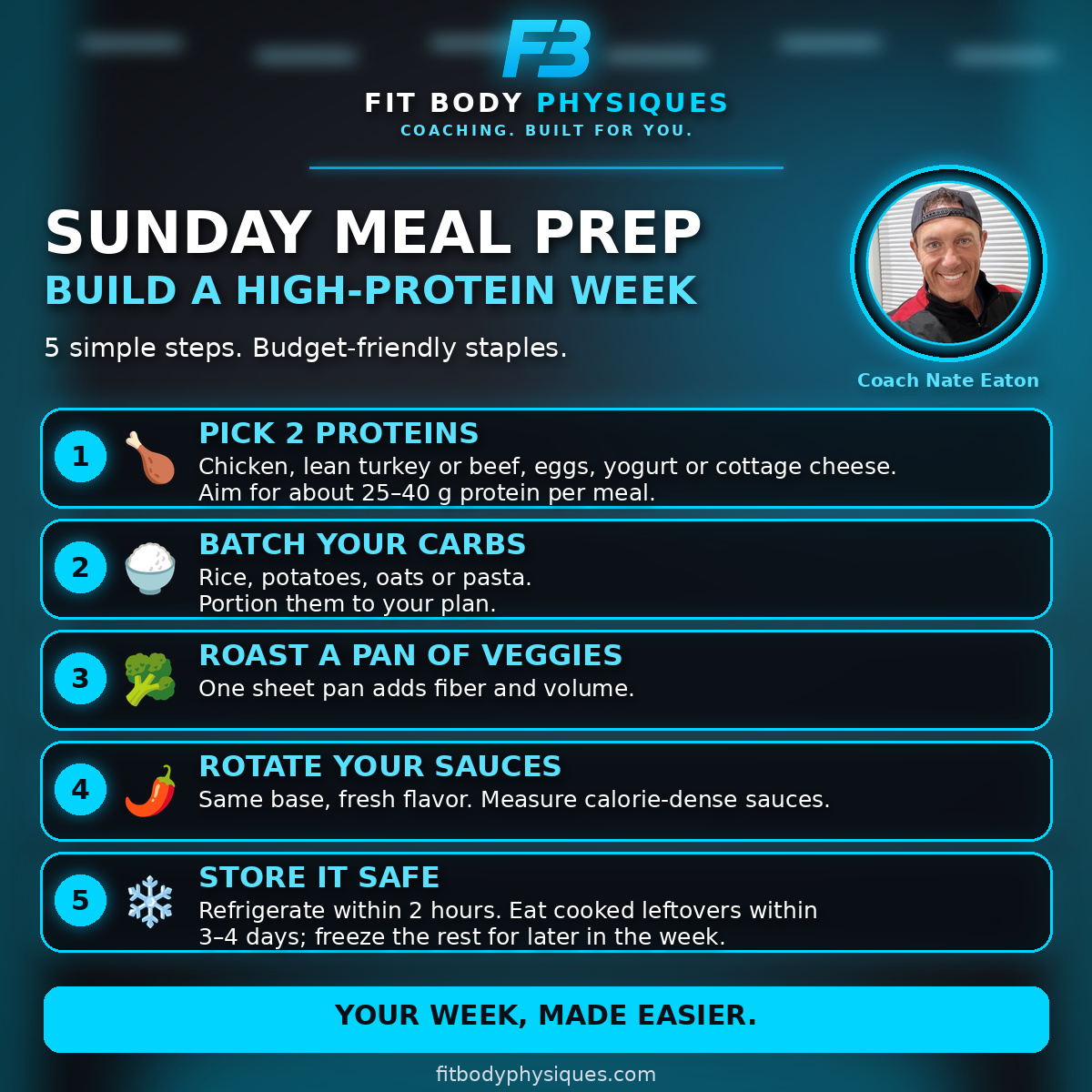
Sunday meal prep doesn’t need to take over your day or empty your grocery budget. The goal isn’t a fridge full of perfect meals. It’s having a few useful basics ready when the week gets busy.
Start with what’s already in your kitchen, then build a short shopping list. Choose ingredients you enjoy and can use more than one way. Here’s the five-step system I’d use to set up a high-protein week without making food another full-time job.
1. Pick two proteins you’ll actually eat
Choose two staples: chicken thighs, lean ground turkey or beef, eggs, Greek yogurt, or cottage cheese. Compare unit prices and shop the options that fit your budget rather than buying something just because it looks like “fitness food.”
Aim for about 25–40 g of protein per meal, with portions matched to your plan. Check labels and portion sizes instead of assuming every container has the same amount. Your two choices don’t both have to need cooking: a batch of chicken plus Greek yogurt can keep prep simple.
2. Batch your carbs and portion to your plan
Rice, potatoes, oats, and pasta are practical building blocks. Pick what you like, cook a batch, and portion it to your plan. You don’t need a different recipe for every lunch.
Think in combinations: chicken with rice one day, then chicken with potatoes another. If you track your food, keep cooked-versus-dry measurements consistent with the entry you use. The point is a repeatable routine, not guessing what landed in the container.
3. Roast one sheet pan of vegetables
Broccoli, peppers, green beans, or zucchini can add fiber and volume without a complicated recipe. Choose what’s on sale and what you’ll enjoy eating. Frozen vegetables are another option when they suit your budget and schedule.
Keep it easy: chop, season, and roast a pan while the other food cooks. You’re building meal components, not auditioning for a cooking show.
4. Rotate sauces, not your whole grocery list
The same protein-and-carb base can feel different with salsa, hot sauce, or a Greek yogurt dressing. Keep sauces separate until you’re ready to eat so you can change the flavor without making another batch.
Measure the calorie-dense ones, including oils and creamy sauces, so they fit the plan too. Budget-friendly meal prep works better when you use the ingredients you already have instead of opening a new bottle for every meal.
5. Store it safely—don’t skip this part
Refrigerate cooked food within 2 hours. Eat cooked leftovers within 3–4 days, and freeze the rest for later in the week. A Sunday batch shouldn’t sit in the fridge all the way through the following weekend.
Divide large batches into shallow containers for quick cooling, label them with the date, and set aside the later-week portions for the freezer. If the temperature is above 90°F, the refrigeration window is 1 hour. These storage reminders follow USDA guidance on leftovers and food safety.
Make this week easier, not perfect
Two proteins, a batch of carbs, a pan of vegetables, a few sauces, and a safe storage plan. That’s enough to start. Repeat what works, adjust what doesn’t, and give yourself fewer food decisions on a busy weekday.
If you’d like macros built around food you actually like, visit fitbodyphysiques.com to explore coaching. Lifestyle coaching stays $99/month. For those working toward the stage, competition prep coaching is $149/month through December 31, 2026 (regularly $179/month), and includes The Honest Prep Guide, now on Amazon. Either way, the plan should fit your life.
Stay strong, Coach Nate Eaton.